
- Homepage
- Authenticity
- Height
- Length
- Material
- Art Cast Iron (4)
- Brass (9)
- Bronze (1001)
- Bronze / Marble (65)
- Bronze And Glass (5)
- Bronze And Marble (3)
- Bronze, Glass (2)
- Glass (27)
- Marble (13)
- Massive Bronze (4)
- Metal (9)
- Plaster (3)
- Porcelain Bronze (19)
- Regule (6)
- Regulus (2)
- Solid Bronze (350)
- Stucco (19)
- White Bronze (2)
- Wood (5)
- Wrought Iron (2)
- Other (3092)
- Weight
- Width
Art Deco Roman Chariot in Green-Patinated Bronze, Rare Workshop Prototype (1920–1940)
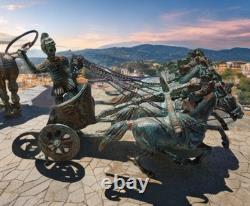

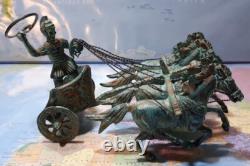
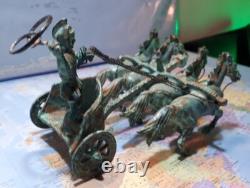
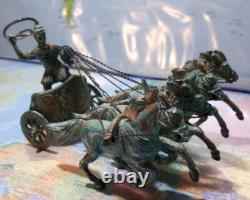
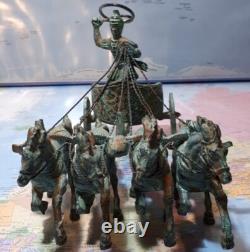
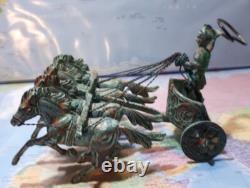
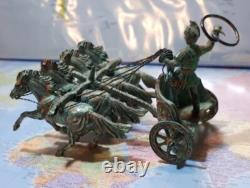
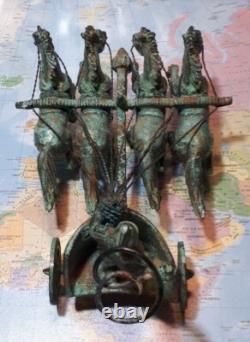
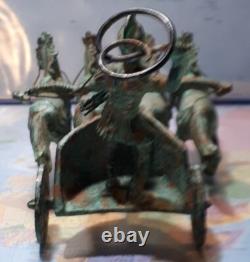
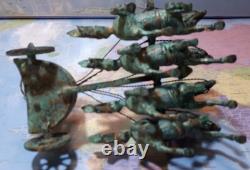
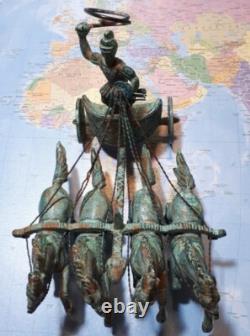
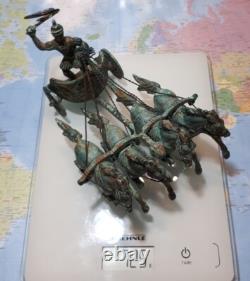


I found it at the bottom of a box one winter morning at a flea market in a small village in southern France. The seller thought it was just a reproduction, one decorative object among many.
A few days later, a collector friend wrote to me: “If the reins really are made of twisted copper, it could be a workshop study or prototype inspired by Kéléty.”
I received two offers, including one from Germany. Today, I am offering it here to someone who will recognize its worth, even without a signature.
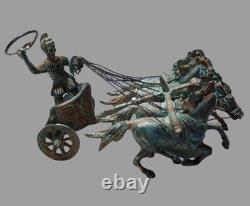
This is not a trinket. It is a solid bronze sculpture with a deep green patina and its original copper reins. The form of the quadriga, its movement, and its tension all evoke Art Deco at its purest. Serious collectors will immediately recognize the influence of Alexandre Kéléty, or even Chiparus. It could be a workshop model or a prototype that was never widely known. For someone with a discerning eye, this is a rare, genuine opportunity.
This is not simply a sale.
It is the passing on of something special.
In the style of Alexandre Kéléty — Art Deco collector’s piece — Quadriga with copper reins.
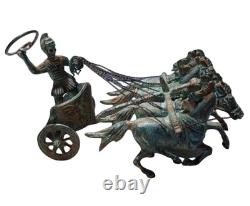
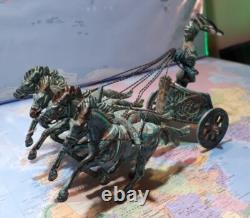
Elegant and striking, this green-patinated bronze sculpture depicts a Roman quadriga drawn by four galloping horses, driven by a helmeted charioteer holding twisted copper-wire reins that heighten the scene’s dramatic tension.
This piece may be an unsigned workshop model or miniature study, used at the time as a working model or prototype. No formal authentication is provided, but the stylistic influence is clear.
Material: Bronze with a green patina and copper reins.
Condition: Very good overall condition, with a deep patina, crisp details, and original reins.
Origin: Purchased at a flea market in a village in southern France.
Dimensions: [To be completed — if you would like help estimating them, send a photo with a size reference.]
This is not merely a decorative object. It is an Art Deco-style work in solid bronze with a green patina, featuring rare details such as its original copper reins. Inspired by the work of Alexandre Kéléty, one of the major sculptors of the interwar period, it is probably an unsigned workshop model or prototype, making it a unique piece.
It offers a rare opportunity to acquire a collectible bronze with a powerful, historically evocative style, at a price well below those charged by major galleries.
An investment with decorative and emotional appeal, and a piece to pass down through generations.
Ideal for collectors of Art Deco art, antiques, or decorative bronzes.
Suited to refined interiors, private galleries, or high-end office décor.
An exceptional gift and a rare piece to pass on.
Secure shipping from France, with careful protective packaging.
I found it in an old, very dusty box at a small flea market in southern France. The man who sold it to me said it was “just decorative,” but I have an eye for these things.
A few days later, a friend who is an avid collector told me: “Those twisted copper reins… it might be a workshop model or a Kéléty prototype.
”
I received two offers, one from someone in Italy and another from Germany. I preferred to wait for the right person. Now I am making it available, but only this once.
This is not just a decorative object. It is a heavy bronze sculpture with a beautiful natural green patina, and the horses have an incredible sense of energy.
I think it is in the style of Alexandre Kéléty, or perhaps Chiparus, but it has no signature. It may be a prototype or an early workshop version.
I have seen similar sculptures listed on professional websites for €1,000 to €3,000. This one is priced lower because it is unsigned, but it has just as much emotional impact, perhaps even more.
This is not just a sale. Make it yours before it is gone.
Art Deco masterpiece — In the style of Alexandre Kéléty — Copper reins — Rare piece.
A stunning, dynamic bronze sculpture depicting a Roman quadriga—a four-horse chariot—driven by a warrior in a scene full of movement. The green patina, or verdigris, and twisted copper reins create a striking contrast, echoing the Art Deco era’s fascination with antiquity and power.
Based on its form and size, this may have been a miniature workshop model or an early prototype, potentially used as a study.
No official authentication is included, but the stylistic resemblance is notable.
Material: Bronze with a green patina and original copper reins.
Condition: Very good, with an elegant aged patina and well-preserved details.
Origin: Found at a village flea market in southern France.
Dimensions and weight: [To be completed.]
Ideal for collectors, decorators, Art Deco enthusiasts, or museum-inspired interiors.
This is not just a decorative item. It is an Art Deco-style work cast in solid bronze with a natural green patina, featuring rare details such as the original twisted copper reins.
The sculpture is strongly inspired by the work of Alexandre Kéléty, a major sculptor of the 1920s and 1930s. It may have been an unsigned workshop model or prototype, making it a unique collector’s piece.
This piece represents a rare opportunity to acquire a period bronze with both artistic and historical depth, at a price well below gallery valuations. An investment with emotional and decorative appeal, and a piece worth passing down.
An antique green-patinated bronze sculpture depicting a Roman chariot in early 20th-century Art Deco style, reminiscent of the works of Kéléty or Chiparus. Featuring horses in motion and copper detailing, this classical quadriga may be an unsigned workshop model. A rare decorative statue sought after by collectors of bronze objects, Roman Empire-themed pieces, classical horse models, and Roman-style sculptures.
An early 20th-century workshop-style bronze chariot with a green patina.
This early 20th-century green-patinated bronze sculpture of a Roman chariot in Art Deco style, reminiscent of Alexandre Kéléty or Demetre Chiparus, features dynamic horses, copper reins, and fine details.